

Friday, June 14, 2013

Tuesday, June 11, 2013

Monday, June 10, 2013
Tuesday, June 4, 2013

Tuesday, May 21, 2013

Monday, May 20, 2013
Wednesday, May 15, 2013
Know your rights Wednesday
Original article here.
Here in the U.S., congress has penned a bill to put a stop to Motorcycle Only Checkpoints.
However well intentioned the NHTSA might be with funding states who want to do this, this kind of authority in the hands of local LEOs usually ends being implemented for all the wrong reasons and probable cause is effectively nullified.
So big respect to HAMC for making a stand and thanks to Gary - Brother Speed MC - Burley for posting on Facebook.
For more info on the bill check out this article in Cycle World.
Here in the U.S., congress has penned a bill to put a stop to Motorcycle Only Checkpoints.
However well intentioned the NHTSA might be with funding states who want to do this, this kind of authority in the hands of local LEOs usually ends being implemented for all the wrong reasons and probable cause is effectively nullified.
So big respect to HAMC for making a stand and thanks to Gary - Brother Speed MC - Burley for posting on Facebook.
For more info on the bill check out this article in Cycle World.
By Stephanie Ip, The Province May 5, 2013
More than 150 Hells Angels, other bikers block road during police showdown on Vancouver Island
More than 150 Hells Angels, other bikers block road during police showdown on Vancouver Island
Police say that more than 150 motorcyclists breezed through a roadside check that police tried to set up on Vancouver Island
More than 150 motorcyclists — including members of Hells Angels — flouted police authority Saturday when the group refused to stop at a roadside check on Vancouver Island.
According to Sgt. Lindsey Houghton, police had information that the bikers would participate in a group ride Saturday and set out to conduct safety checks. Police officers from the Combined Forces Special Enforcement Unit of B.C. and other integrated road safety units then gathered near Duncan to monitor and halt the large group of motorcyclists, who had plans to travel from Nanaimo to Victoria on the Island Highway.
“The bikers, many of whom were observed allegedly ignoring red lights at intersections, speeding, and unsafely passing other vehicles on the road after leaving Nanaimo, were stopped on Highway 1 southbound near the North Cowichan Municipal Hall shortly after 2 p.m.,” Houghton said.
However, the bikers refused to pull into the roadside check area that had been set up and instead, blocked the highway, refusing direction from officers. The showdown ended when outnumbered officers were faced with no choice but to let the group pass. Houghton said police “documented the refusals” and would follow up with appropriate enforcement.
“Seeing a large group of bikers rolling down the highway and through towns can be intimidating for the public and that is their intention — to intimidate,” Houghton said. “Today was yet another example of groups like the Hells Angels thinking they are above the law. CFSEU-BC and its policing partners will continue to monitor events like today’s and ensure the public’s safety by seizing every available and appropriate enforcement opportunity against those involved in organized crime.”
sip@theprovince.com

Tuesday, May 14, 2013

Monday, May 13, 2013
Tuesday, May 7, 2013

Monday, May 6, 2013
Tuesday, April 30, 2013

Monday, April 29, 2013
Friday, April 26, 2013

Tuesday, April 23, 2013

Tuesday, April 16, 2013

Monday, April 15, 2013
Jim Adams Memorial Ride 2013
I never got to meet Jim but from what I'm told, the man did a lot for the local motorcycle community. In April riders from around Idaho and some from Washington gather to remember Jim by donating to the causes he loved. This year was the biggest turn out yet so Lucky Bastards MC took on road guard duty to help 123 bikes get to the various stops safely. A safe and good time was had by all.


Friday, April 12, 2013

Wednesday, April 10, 2013
Know your rights Wednesdady
Secrets of FBI Smartphone Surveillance Tool Revealed in Court Fight
From Wired.com
A legal fight over the government’s use of a secret surveillance tool has provided new insight into how the controversial tool works and the extent to which Verizon Wireless aided federal agents in using it to track a suspect.

Court documents in a case involving accused identity thief Daniel David Rigmaiden describe how the wireless provider reached out remotely to reprogram an air card the suspect was using in order to make it communicate with the government’s surveillance tool so that he could be located.
Rigmaiden, who is accused of being the ringleader of a $4 million tax fraud operation, asserts in court documents that in July 2008 Verizon surreptitiously reprogrammed his air card to make it respond to incoming voice calls from the FBI and also reconfigured it so that it would connect to a fake cell site, or stingray, that the FBI was using to track his location.
Air cards are devices that plug into a computer and use the wireless cellular networks of phone providers to connect the computer to the internet. The devices are not phones and therefore don’t have the ability to receive incoming calls, but in this case Rigmaiden asserts that Verizon reconfigured his air card to respond to surreptitious voice calls from a landline controlled by the FBI.
The FBI calls, which contacted the air card silently in the background, operated as pings to force the air card into revealing its location.
In order to do this, Verizon reprogrammed the device so that when an incoming voice call arrived, the card would disconnect from any legitimate cell tower to which it was already connected, and send real-time cell-site location data to Verizon, which forwarded the data to the FBI. This allowed the FBI to position its stingray in the neighborhood where Rigmaiden resided. The stingray then “broadcast a very strong signal” to force the air card into connecting to it, instead of reconnecting to a legitimate cell tower, so that agents could then triangulate signals coming from the air card and zoom-in on Rigmaiden’s location.
To make sure the air card connected to the FBI’s simulator, Rigmaiden says that Verizon altered his air card’s Preferred Roaming List so that it would accept the FBI’s stingray as a legitimate cell site and not a rogue site, and also changed a data table on the air card designating the priority of cell sites so that the FBI’s fake site was at the top of the list.
Rigmaiden makes the assertions in a 369-page document he filed in support of a motion to suppress evidence gathered through the stingray. Rigmaiden collected information about how the stingray worked from documents obtained from the government, as well as from records obtained through FOIA requests filed by civil liberties groups and from open-source literature.
During a hearing in a U.S. District Court in Arizona on March 28 to discuss the motion, the government did not dispute Rigmaiden’s assertions about Verizon’s activities.
The actions described by Rigmaiden are much more intrusive than previously known information about how the government uses stingrays, which are generally employed for tracking cell phones and are widely used in drug and other criminal investigations.
The government has long asserted that it doesn’t need to obtain a probable-cause warrant to use the devices because they don’t collect the content of phone calls and text messages and operate like pen-registers and trap-and-traces, collecting the equivalent of header information.
The government has conceded, however, that it needed a warrant in his case alone — because the stingray reached into his apartment remotely to locate the air card — and that the activities performed by Verizon and the FBI to locate Rigmaiden were all authorized by a court order signed by a magistrate.
The Electronic Frontier Foundation and the American Civil Liberties Union of Northern California, who have filed an amicus brief in support of Rigmaiden’s motion, maintain that the order does not qualify as a warrant and that the government withheld crucial information from the magistrate — such as identifying that the tracking device they planned to use was a stingray and that its use involved intrusive measures — thus preventing the court from properly fulfilling its oversight function.
“It shows you just how crazy the technology is, and [supports] all the more the need to explain to the court what they are doing,” says EFF Staff Attorney Hanni Fakhoury. “This is more than just [saying to Verizon] give us some records that you have sitting on your server. This is reconfiguring and changing the characteristics of the [suspect's] property, without informing the judge what’s going on.”
The secretive technology, generically known as a stingray or IMSI catcher, allows law enforcement agents to spoof a legitimate cell tower in order to trick nearby mobile phones and other wireless communication devices like air cards into connecting to the stingray instead of a phone carrier’s legitimate tower.
When devices connect, stingrays can see and record their unique ID numbers and traffic data, as well as information that points to the device’s location.
By moving the stingray around and gathering the wireless device’s signal strength from various locations in a neighborhood, authorities can pinpoint where the device is being used with much more precision than they can get through data obtained from a mobile network provider’s fixed tower location.
Use of the spy technology goes back at least 20 years. In a 2009 Utah case, an FBI agent described using a cell site emulator more than 300 times over a decade and indicated that they were used on a daily basis by U.S, Marshals, the Secret Service and other federal agencies.
The FBI used a similar device to track former hacker Kevin Mitnick in 1994, though the version used in that case was much more primitive and passive.
A 1996 Wired story about the Mitnick case called the device a Triggerfish and described it as “a technician’s device normally used for testing cell phones.” According to the story, the Triggerfish was “a rectangular box of electronics about a half a meter high controlled by a PowerBook” that was essentially “a five-channel receiver, able to monitor both sides of a conversation simultaneously.” The crude technology was hauled around in a station wagon and van. A black coaxial cable was strung out of the vehicle’s window to connect the Triggerfish to a direction-finding antenna on the vehicle’s roof, which had four antenna prongs that reached 30 centimeters into the sky.
The technology has become much sleeker and less obtrusive since then, but still operates under the same principles.
In Rigmaiden’s case, agents apparently used two devices made by a Florida-based company called Harris. One was the company’s StingRay system, which is designed to work from a vehicle driven around a neighborhood to narrow a suspect’s location to a building. Once agents tracked the signals from Rigmaiden’s air card to the Domicilio Apartments complex in Santa Clara, California, they apparently used another device made by Harris called the KingFish — a handheld system that allowed them to walk through the complex and zero-in on Rigmaiden’s air card in apartment 1122.
Although a number of companies make stingrays, including Verint, View Systems, Altron, NeoSoft, MMI, Ability, and Meganet, the Harris line of cell site emulators are the only ones that are compatible with CDMA2000-based devices. Others can track GSM/UMTS-based communications, but the Harris emulators can track CDMA2000, GSM and iDEN devices, as well as UMTS. The Harris StingRay and KingFish devices can also support three different communication standards simultaneously, without having to be reconfigured.
Rigmaiden was arrested in 2008 on charges that he was the mastermind behind an operation that involved stealing more than $4 million in refunds from the IRS by filing fraudulent tax returns. He and others are accused of using numerous fake IDs to open internet and phone accounts and using more than 175 different IP addresses around the United States to file the fake returns, which were often filed in bulk as if through an automated process. Rigmaiden has been charged with 35 counts of wire fraud, 35 counts of identify theft, one count of unauthorized computer access and two counts of mail fraud.

A PC5740 Air Card.
A court order was then submitted to Verizon Wireless requiring the company to provide historical cell site data on the account for the previous 30 days to determine what cell towers the air card had contacted and determine its general location. Verizon responded by supplying the government with information that included the latitude and longitude coordinates for five cell sites in San Jose and Santa Clara cities, in the heart of Silicon Valley.
In July, the government served Verizon Wireless with another court order directing the company to assist the FBI in the use and monitoring of a mobile tracking device to locate an unidentified suspect. The order directed Verizon Wireless to provide the FBI with any “technical assistance needed to ascertain the physical location of the [air card]….”
The government has fought hard to suppress information about how it uses stingrays, but in his motion to suppress, Rigmaiden lays out in great detail how the surveillance occurred and the nature of the technical assistance Verizon provided the FBI.
On the morning of July 14, 2008, FBI Agent Killigrew created a cell tower range chart/map consisting of a street map, plotted Verizon Wireless cell site sectors belonging to cell site Nos. 268, 139, and 279, and a triangulated aircard location signature estimate represented by a shaded area. On the chart/map, the total land area collectively covered by cell site Nos. 268, 139, and 279 is approximately 105,789,264 ft2. FBI Agent Killigrew used triangulation techniques and location signature techniques to eliminate 93.9% of that 105,789,264 ft2 area resulting in the location estimate being reduced to 6,412,224 ft2 represented by the shaded area. The shaded area on the cell tower range chart covers the location of apartment No. 1122 at the Domicilio apartment complex.On July 15, agents with the FBI, IRS and US Postal Service flew to San Jose to triangulate Rigmaiden’s location using the stingray. They worked with technical agents from the San Francisco FBI’s Wireless Intercept and Tracking Team to conduct the real-time tracking.
According to Rigmaiden, the agents drove around the cell site areas gathering information about signal range and radio frequencies for each cell site sector. “The radio frequency information was needed so that the FBI technical agents could properly configure their StingRay and KingFish for use in cell site emulator mode,” Rigmaiden writes. “By referencing a list of all the radio frequencies already in use, the FBI was able to choose an unused frequency for use by its emulated cellular network that would not interfere with the various FCC licensed cellular networks already operating in the noted area.”
The next day, Verizon Wireless surreptitiously reprogrammed Rigmaiden’s air card so that it would recognize the FBI’s stingray as a legitimate cell site and connect to it “prior to attempting connections with actual Verizon Wireless cell sites.” The FBI needed Verizon to reprogram the device because it otherwise was configured to reject rogue, unauthorized cell sites, Rigmaiden notes.
On July 16, the FBI placed 32 voice calls to the air card between 11am and 5pm. Each time the air card was notified that a call was coming in, it dropped its data connection and went into idle mode. At the same time, it sent real-time cell site location information to Verizon, which forwarded the information to the FBI’s DCS-3000 servers, part of the elaborate digital collection system the FBI operates for wiretapping and pen-registers and trap-and-traces. From the FBI’s servers, the location data was transmitted wirelessly through a VPN to the FBI’s technical agents “lurking in the streets of Santa Clara” with the StingRay.

A stingray, made by Harris Corp. Image: U.S. Patent and Trademark Office
“Because the defendant attempted to keep his aircard continuously connected to the Internet, the FBI only had a very short window of time to force the aircard to handoff its signal to the StingRay after each surreptitious voice call [and] the FBI needed to repeatedly call the aircard in order to repeatedly boot it offline over the six hours of surreptitious phone calls,” Rigmaiden writes. “Each few minute window of time that followed each denial-of-service attack (i.e., surreptitious phone call) was used by the FBI to move its StingRay, while in cell site emulator mode, to various positions until it was close enough to the aircard to force an Idle State Route Update (i.e., handoff).”
Rigmaiden maintains that once the connection was made, the StingRay wrote data to the air card to extend the connection and also began to “interrogate” the air card to get it to broadcast its location. The FBI used the Harris AmberJack antenna to deliver highly-directional precision signals to the device, and moved the StingRay around to various locations in order to triangulate the precise location of the air card inside the Domicilio Apartments complex.
According to Rigmaiden, agents also transmitted Reverse Power Control bits to his air card to get it to transmit its signals at “a higher power than it would have normally transmitted if it were accessing cellular service through an actual Verizon Wireless cell site.”
Once agents had tracked the device to the Domicilio Apartments complex, they switched out the StingRay for the handheld KingFish device to locate Rigmaiden’s apartment within the complex.
Around 1am on July 17, an FBI agent sent a text message to another FBI agent stating, “[w]e are down to an apt complex….” By 2:42 am, one of the FBI technical agents sent a text message to someone stating that they had “[f]ound the card” and that agents were “working on a plan for arrest.”
Agents still didn’t know who was in the apartment — since Rigmaiden had used an assumed identity to lease the unit — but they were able to stake out the apartment complex and engage in more traditional investigative techniques to gather more intelligence about who lived in unit 1122. On August 3, while the apartment was still under surveillance, Rigmaiden left the unit. Agents followed him a short distance until Rigmaiden caught on that he was being followed. After a brief foot chase, he was arrested.
Rigmaiden and the American Civil Liberties Union and Electronic Frontier Foundation have argued that the government did not obtain a legitimate warrant to conduct the intrusive surveillance through the stingray. They say it’s indicative of how the government has used stingrays in other cases without proper disclosure to judges about how they work, and have asked the court to suppress evidence gathered through the use of the device.
U.S. District Court Judge David Campbell is expected to rule on the motion to suppress within a few weeks.
Tuesday, April 9, 2013

Monday, April 8, 2013
Friday, April 5, 2013

Wednesday, April 3, 2013
Know your rights Wednesday
Know your rights Wednesday - More big brother stuff: The Patriot Act I and II, NDAA, CISPA and now this. Click here for the web page
EXCLUSIVE - U.S. to let spy agencies scour Americans' finances
By Emily Flitter and Stella Dawson and Mark Hosenball
NEW YORK/WASHINGTON | Wed Mar 13, 2013 2:31pm EDT
(Reuters) - The Obama administration is drawing up plans to give all U.S. spy agencies full access to a massive database that contains financial data on American citizens and others who bank in the country, according to a Treasury Department document seen by Reuters.
The proposed plan represents a major step by U.S. intelligence agencies to spot and track down terrorist networks and crime syndicates by bringing together financial databanks, criminal records and military intelligence. The plan, which legal experts say is permissible under U.S. law, is nonetheless likely to trigger intense criticism from privacy advocates.
Financial institutions that operate in the United States are required by law to file reports of "suspicious customer activity," such as large money transfers or unusually structured bank accounts, to Treasury's Financial Crimes Enforcement Network (FinCEN).
The Federal Bureau of Investigation already has full access to the database. However, intelligence agencies, such as the Central Intelligence Agency and the National Security Agency, currently have to make case-by-case requests for information to FinCEN.
The Treasury plan would give spy agencies the ability to analyze more raw financial data than they have ever had before, helping them look for patterns that could reveal attack plots or criminal schemes.
The planning document, dated March 4, shows that the proposal is still in its early stages of development, and it is not known when implementation might begin.
Financial institutions file more than 15 million "suspicious activity reports" every year, according to Treasury. Banks, for instance, are required to report all personal cash transactions exceeding $10,000, as well as suspected incidents of money laundering, loan fraud, computer hacking or counterfeiting.
"For these reports to be of value in detecting money laundering, they must be accessible to law enforcement, counter-terrorism agencies, financial regulators, and the intelligence community," said the Treasury planning document.
A Treasury spokesperson said U.S. law permits FinCEN to share information with intelligence agencies to help detect and thwart threats to national security, provided they adhere to safeguards outlined in the Bank Secrecy Act. "Law enforcement and intelligence community members with access to this information are bound by these safeguards," the spokesperson said in a statement.
Some privacy watchdogs expressed concern about the plan when Reuters outlined it to them.
A move like the FinCEN proposal "raises concerns as to whether people could find their information in a file as a potential terrorist suspect without having the appropriate predicate for that and find themselves potentially falsely accused," said Sharon Bradford Franklin, senior counsel for the Rule of Law Program at the Constitution Project, a non-profit watchdog group.
Despite these concerns, legal experts emphasize that this sharing of data is permissible under U.S. law. Specifically, banks' suspicious activity reporting requirements are dictated by a combination of the Bank Secrecy Act and the USA PATRIOT Act, which offer some privacy safeguards.
National security experts also maintain that a robust system for sharing criminal, financial and intelligence data among agencies will improve their ability to identify those who plan attacks on the United States.
"It's a war on money, war on corruption, on politically exposed persons, anti-money laundering, organized crime," said Amit Kumar, who advised the United Nations on Taliban sanctions and is a fellow at the Democratic think tank Center for National Policy.
SUSPICIOUS ACTIVITY
The Treasury document outlines a proposal to link the FinCEN database with a computer network used by U.S. defense and law enforcement agencies to share classified information called the Joint Worldwide Intelligence Communications System.
The plan calls for the Office of the Director of National Intelligence - set up after 9/11 to foster greater collaboration among intelligence agencies - to work with Treasury. The Director of National Intelligence declined to comment.
More than 25,000 financial firms - including banks, securities dealers, casinos, and money and wire transfer agencies - routinely file "suspicious activity reports" to FinCEN. The requirements for filing are so strict that banks often over-report, so they cannot be accused of failing to disclose activity that later proves questionable. This over-reporting raises the possibility that the financial details of ordinary citizens could wind up in the hands of spy agencies.
Stephen Vladeck, a professor at American University's Washington College of Law, said privacy advocates have already been pushing back against the increased data-sharing activities between government agencies that followed the September 11 attacks.
"One of the real pushes from the civil liberties community has been to move away from collection restrictions on the front end and put more limits on what the government can do once it has the information," he said.
EXCLUSIVE - U.S. to let spy agencies scour Americans' finances
By Emily Flitter and Stella Dawson and Mark Hosenball
NEW YORK/WASHINGTON | Wed Mar 13, 2013 2:31pm EDT
(Reuters) - The Obama administration is drawing up plans to give all U.S. spy agencies full access to a massive database that contains financial data on American citizens and others who bank in the country, according to a Treasury Department document seen by Reuters.
The proposed plan represents a major step by U.S. intelligence agencies to spot and track down terrorist networks and crime syndicates by bringing together financial databanks, criminal records and military intelligence. The plan, which legal experts say is permissible under U.S. law, is nonetheless likely to trigger intense criticism from privacy advocates.
Financial institutions that operate in the United States are required by law to file reports of "suspicious customer activity," such as large money transfers or unusually structured bank accounts, to Treasury's Financial Crimes Enforcement Network (FinCEN).
The Federal Bureau of Investigation already has full access to the database. However, intelligence agencies, such as the Central Intelligence Agency and the National Security Agency, currently have to make case-by-case requests for information to FinCEN.
The Treasury plan would give spy agencies the ability to analyze more raw financial data than they have ever had before, helping them look for patterns that could reveal attack plots or criminal schemes.
The planning document, dated March 4, shows that the proposal is still in its early stages of development, and it is not known when implementation might begin.
Financial institutions file more than 15 million "suspicious activity reports" every year, according to Treasury. Banks, for instance, are required to report all personal cash transactions exceeding $10,000, as well as suspected incidents of money laundering, loan fraud, computer hacking or counterfeiting.
"For these reports to be of value in detecting money laundering, they must be accessible to law enforcement, counter-terrorism agencies, financial regulators, and the intelligence community," said the Treasury planning document.
A Treasury spokesperson said U.S. law permits FinCEN to share information with intelligence agencies to help detect and thwart threats to national security, provided they adhere to safeguards outlined in the Bank Secrecy Act. "Law enforcement and intelligence community members with access to this information are bound by these safeguards," the spokesperson said in a statement.
Some privacy watchdogs expressed concern about the plan when Reuters outlined it to them.
A move like the FinCEN proposal "raises concerns as to whether people could find their information in a file as a potential terrorist suspect without having the appropriate predicate for that and find themselves potentially falsely accused," said Sharon Bradford Franklin, senior counsel for the Rule of Law Program at the Constitution Project, a non-profit watchdog group.
Despite these concerns, legal experts emphasize that this sharing of data is permissible under U.S. law. Specifically, banks' suspicious activity reporting requirements are dictated by a combination of the Bank Secrecy Act and the USA PATRIOT Act, which offer some privacy safeguards.
National security experts also maintain that a robust system for sharing criminal, financial and intelligence data among agencies will improve their ability to identify those who plan attacks on the United States.
"It's a war on money, war on corruption, on politically exposed persons, anti-money laundering, organized crime," said Amit Kumar, who advised the United Nations on Taliban sanctions and is a fellow at the Democratic think tank Center for National Policy.
SUSPICIOUS ACTIVITY
The Treasury document outlines a proposal to link the FinCEN database with a computer network used by U.S. defense and law enforcement agencies to share classified information called the Joint Worldwide Intelligence Communications System.
The plan calls for the Office of the Director of National Intelligence - set up after 9/11 to foster greater collaboration among intelligence agencies - to work with Treasury. The Director of National Intelligence declined to comment.
More than 25,000 financial firms - including banks, securities dealers, casinos, and money and wire transfer agencies - routinely file "suspicious activity reports" to FinCEN. The requirements for filing are so strict that banks often over-report, so they cannot be accused of failing to disclose activity that later proves questionable. This over-reporting raises the possibility that the financial details of ordinary citizens could wind up in the hands of spy agencies.
Stephen Vladeck, a professor at American University's Washington College of Law, said privacy advocates have already been pushing back against the increased data-sharing activities between government agencies that followed the September 11 attacks.
"One of the real pushes from the civil liberties community has been to move away from collection restrictions on the front end and put more limits on what the government can do once it has the information," he said.
Tuesday, April 2, 2013

Monday, April 1, 2013
Friday, March 29, 2013

Wednesday, March 27, 2013
Know your rights Wednesday
Know your rights Wednesday:
Q: How do know when a cop or a politician is lying?
A: His lips are moving.
Whenever the government says "We'll only use this power in certain and extreme circumstances" they're lying.
Predator drones seeking lost cows
March 5, 2013
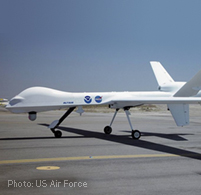
Police
in North Dakota borrowed a $154 million MQ-9 Predator B drone from the
Department of Homeland Security to arrest a family of anti-government
separatists who refused to return six cows that wandered onto their
farm. After a standoff over the refusal to return the cows, local authorities called DHS and asked them to deploy a multi-million dollar drone
to surveil the farmer’s property. This incident was the first time a
drone owned by the U.S. government was used against civilians for local
police work.
Tuesday, March 26, 2013

Monday, March 25, 2013
Mad Music Monday
Not a huge fan of Fred Durst but when the beat drops at about 0:30 ya just wanna fuck shit up. - Sean
Wednesday, March 20, 2013
Know your rights Wednesday
That pesky Bill of Rights ruins everything.
"Gallardo singled out the Hells Angels as one reason why police must defend Arizona from the Bill of Rights"
An Arizona bill intended to reduce police harassment of bikers died last week. The bill was SB 1086 sponsored by State Senator Judy Burges. It was voted out of the Senate Public Safety Committee last month but failed in the Arizona Senate Committee of the Whole.
The bill would have required that police officers in training be instructed that “the sole fact that a person rides a motorcycle or wears motorcycle-related paraphernalia” does not amount to a reasonable suspicion or probable cause that riders are criminals.
The Arizona Confederation of Clubs and numerous members of the Confederation had lobbied on behalf of the bill. Dozens of bikers packed last month’s hearing and told the politicians about being stopped and held at gun point for up to an hour while cops tried to find an excuse to arrest them and tow their bikes.
Get the full story at The Aging Rebel.
"Gallardo singled out the Hells Angels as one reason why police must defend Arizona from the Bill of Rights"
An Arizona bill intended to reduce police harassment of bikers died last week. The bill was SB 1086 sponsored by State Senator Judy Burges. It was voted out of the Senate Public Safety Committee last month but failed in the Arizona Senate Committee of the Whole.
The bill would have required that police officers in training be instructed that “the sole fact that a person rides a motorcycle or wears motorcycle-related paraphernalia” does not amount to a reasonable suspicion or probable cause that riders are criminals.
The Arizona Confederation of Clubs and numerous members of the Confederation had lobbied on behalf of the bill. Dozens of bikers packed last month’s hearing and told the politicians about being stopped and held at gun point for up to an hour while cops tried to find an excuse to arrest them and tow their bikes.
Get the full story at The Aging Rebel.
Tuesday, March 19, 2013

Monday, March 18, 2013
Friday, March 15, 2013

Thursday, March 14, 2013
Know your rights wednesday
On Thursday this week because I posted it to the Facebook page and not here.
And if you're going to record the cops, you might want to use a device other than your phone.
And if you're going to record the cops, you might want to use a device other than your phone.
Tuesday, March 12, 2013

Monday, March 11, 2013
Mad Music Monday
For Tommy and Ben on their way home today. Ride safe. And if you cant ride safe, ride fast.
Tommy and Ben run to the coast
We thought they were crazy trying to cross the pass this time of year but you have to be a little crazy to be a Lucky Bastard anyway.


Friday, March 8, 2013

Monday, March 4, 2013
Tuesday, February 26, 2013

Monday, February 25, 2013
Friday, February 22, 2013

Subscribe to:
Comments (Atom)